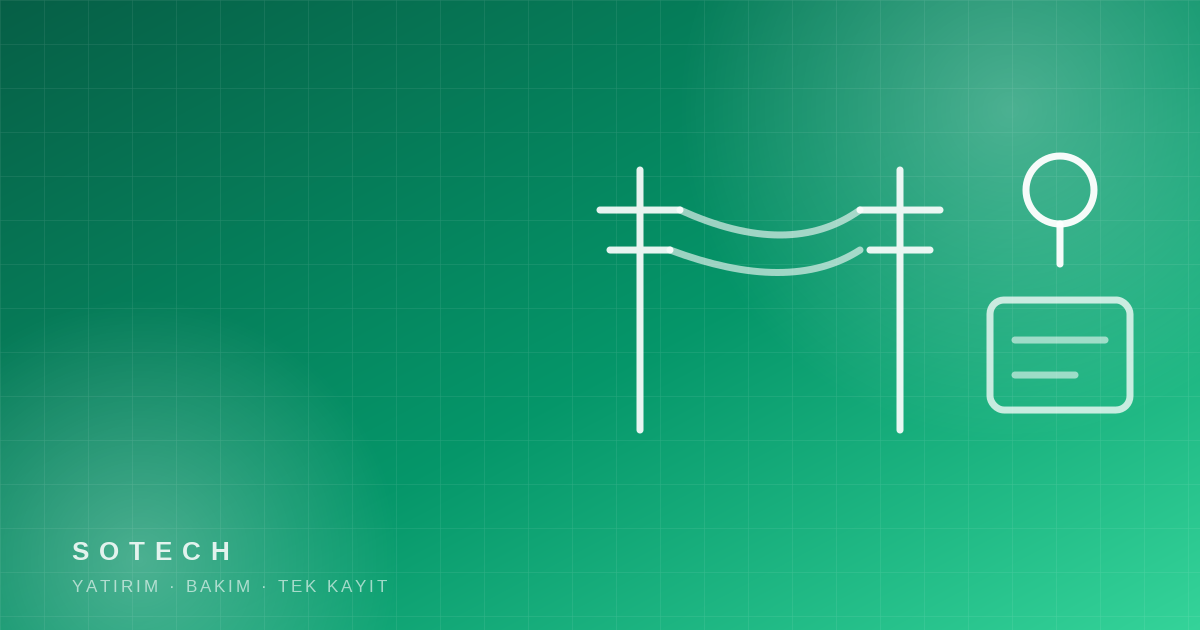
The investment budget in one spreadsheet, maintenance records in another system, the grid map somewhere else. In distribution companies the real planning bottleneck is not missing data but the same asset being described differently in different places.
Ask a distribution company "how many transformers are on this feeder, which ones are overdue for maintenance, and which should we invest in next year?" and the answer is usually assembled from several sources: the map in the geographic information system, the maintenance team's spreadsheet, the investment team's budget file and what the field crew knows. Each may be correct on its own, but if they describe the same asset with different names, statuses and dates, the plan built on top of them is inconsistent too.
The problem is not missing data but scattered data
Distribution companies actually hold a lot of data. The problem is that it does not come together in a single asset record. A transformer's fault history lives in the maintenance system, its location on the map, its age and investment details in accounting. When investments are prioritized, these pieces are stitched together by hand; the same effort is repeated every reporting period, and the most current information often stays in the field crew's heads.
What does a single record mean?
- Every grid asset has one location on the map and one identity.
- Maintenance plans, work orders and fault records are linked to that identity rather than living in separate lists.
- Investment projects are linked to the assets they affect, so budget and grid are seen on the same screen.
- Updates from the field — a new pole, replaced equipment, a detected fault — are written straight to that record.
The field owns the record
The only sustainable way to keep the asset record current is to capture updates where the work happens. If a field crew enters the result of a maintenance job or a repaired fault from a mobile app, with photo and location, the record is updated without anyone retyping it at the office. That is why working offline in areas without coverage is a necessity, not a luxury.
Why investment decisions should rest on this record
Investment planning is a decision about the future, but it depends on the quality of past data. Where faults keep recurring, which equipment is getting more expensive to maintain and which lines are approaching capacity cannot be seen reliably without a consistent asset record. A single record makes these answers visible at any time instead of leaving them to the next reporting period.
A good investment plan starts with one record that accurately describes the grid as it is today.
How to make the transition
There is no need to replace every system in a day. First, existing map and inventory data are merged into a single record, inconsistencies are listed and verified in the field. Next, maintenance and work order processes are linked to that record, and finally investment planning moves onto the same structure. Each step makes the previous step's data more reliable.
We built the GeoEner Investment and Maintenance Management System on exactly this approach: GIS-based asset inventory, investment planning, maintenance and work order management, and a field mobile app on one platform. GeoEner is live at ARAS EDAŞ and KÇETAŞ. Get in touch to discuss how it would work on your grid.
Let's plan this transformation together
We can bring what we covered in this article to life for your organization. Tell us your needs and we'll draw up a roadmap tailored to you.